
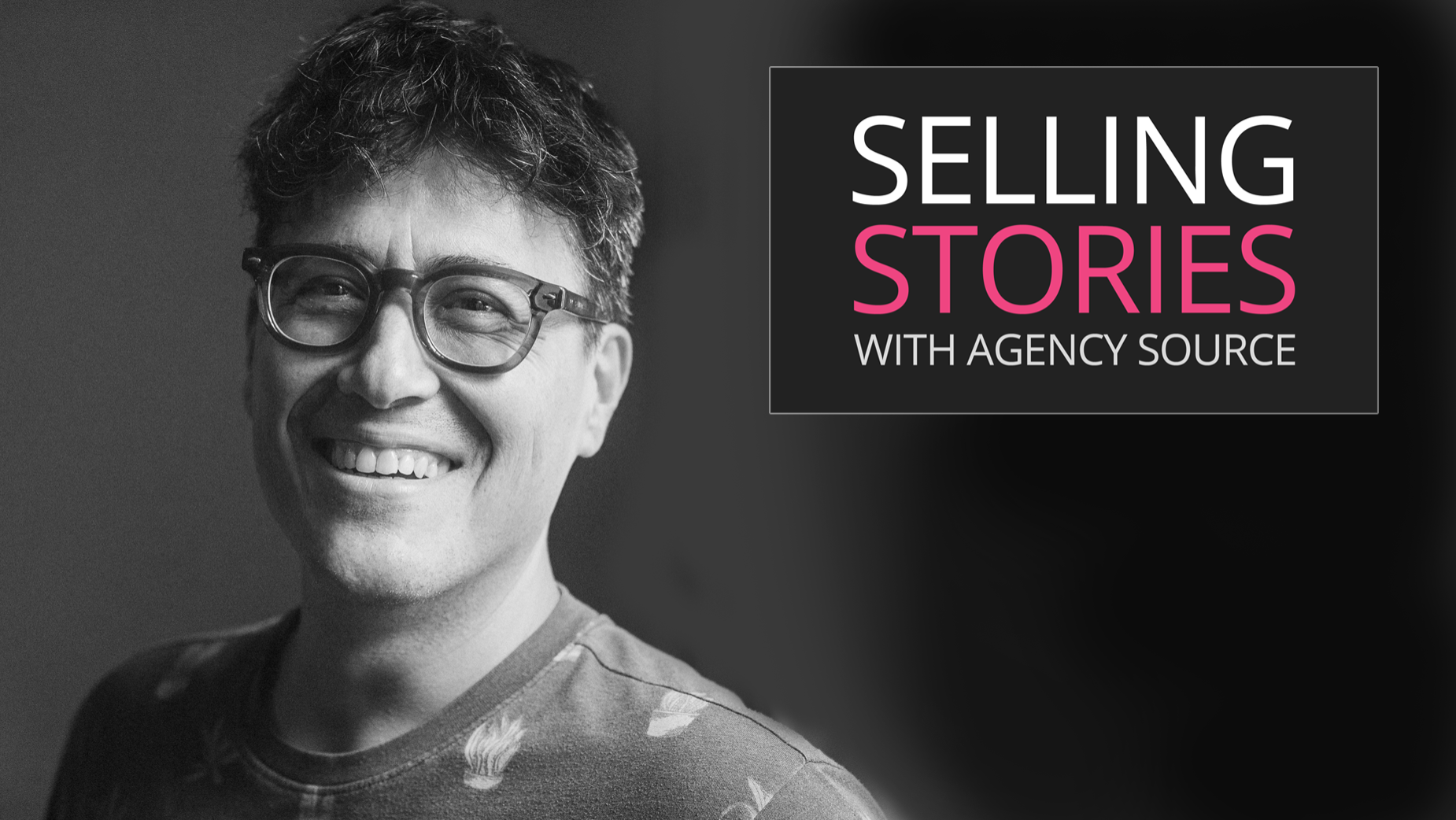
This ‘Selling Stories’ conversation brings together Ross MacRae of Agency Source and Rubén Sierra, founder of CAFFEINE, to explore how production, creativity, and collaboration are evolving in a post-pandemic landscape. Moderated by Skylar Davis, the discussion covers the rise of remote workflows, shifting client expectations, the growing influence of social-first content, and the opportunity for US agencies to tap into global talent, particularly across Latin America. At its core, the conversation examines how strong systems, creative alignment, and human connection are redefining how great work gets made today.
Skylar> Rubén, CAFFEINE works with US production companies, agencies, and brands while tapping into a global network of creative talent. What opportunity did you see in the market when you launched the company?
Rubén> It’s interesting because the origin story really comes from the pandemic. I have a background as a film producer, and my co-founder, Adrián Gayer, also comes from production and post-production for independent films. We’ve always been very hands-on in post, producers who really understand and manage that process.
During that time, we were post-producing a film I produced, Plaza Cathedral, which was shortlisted for the Academy Awards. What’s interesting is that even before the pandemic, we were already working remotely, the director was in Tel Aviv, the editor was in Chile, sound was done in Colombia, and VFX was handled in Mexico. So everything was happening remotely before it became standard.
The workflows were more rudimentary back then; we didn’t have the remote capabilities we have now, but we were very focused on building systems that worked.
Ross> So would you say you were pioneers?
Rubén> In some ways, yes. We had already developed a workflow that allowed us to collaborate across regions, and when the pandemic hit, we started getting calls from directors and DPs in the US asking how to replicate that model, especially for smaller or social projects. That’s when we realised this wasn’t just a temporary fix—it was a scalable opportunity.
We were able to position Mexico as a hub and offer a structured alternative to what was otherwise a very DIY moment for the industry.
Ross> I remember a lot of that work being very improvised, people directing amateur actors and figuring things out on the fly.
Rubén> Exactly. And while we had a system, we also had to adapt. I remember sending ADR kits to actors’ homes, but also learning from collaborators that something as simple as an iPhone could replace a lav mic. So it became a mix of structure and improvisation. I think that experience really reinforced how necessity drives innovation.
Ross> When you’re faced with a challenge, you find a way to solve it, and often faster than you expect.
Rubén> Totally. And coming from the independent film space helped with that. In that world, there’s often no client, you’re working with limited resources, sometimes even your own money, so you’re constantly finding creative solutions.
Then, when you bring that mindset into advertising, which is more structured and client-driven, you’re able to offer different kinds of solutions. That combination really shaped how we built CAFFEINE.
At first, there was some friction in building relationships remotely, but the pandemic forced people to adapt. Geography stopped being as important; we were all in the same frame, on the same screen, and that shift made it possible to connect with agencies and clients in a completely new way.
Skylar> From the agency perspective, how have client expectations around production value shifted in recent years, especially as budgets tighten, but brands still expect premium work?
Rubén> Now that we’re in the ‘new normal,’ expectations haven’t gone down at all. Clients still want the best work. What has changed is the margin for error. Brands expect premium-quality output, but with shorter timelines and a much higher volume of deliverables.
When I started, we were shooting on 35mm, and everything was focused on a single hero piece. You’d create the main spot, and that was essentially it. Now, you still have the hero video, but you also have countless adaptations, and not just technical cutdowns. These are pieces that need to be tailored to the platforms they live on, which adds a whole new layer of complexity.
Ross> So it’s not just one deliverable anymore, you’re being asked for a whole ecosystem of content, as if it’s just as simple as lifting a short sequence from the original shoot.
Rubén> Exactly. And I can give you a real example. A couple of years ago, we worked on a shoot in Mexico City for a New York-based luggage brand. We were initially focused on producing a hero video, but then the client asked if we could have someone shoot behind-the-scenes content on an iPhone.
That quickly evolved. It wasn’t just behind-the-scenes anymore; it became additional social content, snippets, and platform-specific pieces. By the end, that ‘one person with an iPhone’ had a full setup: a team, a shot list, even an assistant director. We had to make space within the main production for what essentially became a second production focused entirely on social.
What that shows is that, in many cases, products are now being sold more through social content than through the hero piece itself.
Ross> So it’s no longer just the TV spot doing the heavy lifting.
Rubén> Precisely, at least for certain audiences. There are still spaces where traditional formats matter, but for many brands, especially those targeting younger or more digitally native consumers, the decision-making process is driven by what people see on social media.
That shift has forced production companies, post-production teams, and end-to-end studios like ours to adapt. We’re no longer just delivering a single asset. We’re helping clients manage a much broader content ecosystem.
At the same time, there’s still a divide. Larger agencies with bigger accounts continue to produce high-end, large-scale shoots. That level of premium production hasn’t disappeared—it’s just now operating alongside this growing demand for high-volume, platform-specific content.
Skylar> Rubén, you often help connect US clients with directors and artists they may not have discovered otherwise. What are you seeing from Latin American talent right now that makes them especially exciting for brands?
Rubén> This is a question that really excites me. Latin America, and Mexico in particular, has an incredibly strong visual arts tradition, from muralism to world-class cinematography. I often point to what I’d call Mexico’s ‘golden run’ between 2013 and 2018, when Emmanuel Lubezki won three Academy Awards in a row, something that really speaks to the depth of creative excellence coming out of the region.
That foundation translates directly into what we do. At its core, our industry is about crafting visual assets, whether that’s commercials, films, or branded content, and there’s a huge amount of talent in the region that brings both artistry and perspective to that work.
What makes it especially exciting today is that this creative depth is now combined with international technical standards. Mexico also has a long-standing production history, going back to the golden era of Mexican cinema, and continues to be a major hub for shoots.
Ross> Yep.
Rubén> So when you’re sourcing talent, it’s a very strong place to look. There’s also a natural connection to the US, geographically and culturally, which makes collaboration easier. At CAFFEINE, we source talent globally, but Mexico remains our strongest creative base.
What’s really compelling for brands is that they can access a fresh creative perspective without sacrificing quality. The level of craft is there, it’s a given, but what we’re also tapping into is a cultural bridge that allows the work to resonate across different audiences.
Skylar> Rubén, when agencies look beyond the US for creative collaborators, what tends to drive that decision most: creative perspective, production efficiency, budget considerations, or something else?
Rubén> Budget is always part of the conversation, but it’s rarely the only factor. What agencies, production companies, and brands are really looking for is the right creative fit—along with flexibility and partners they can trust.
Sometimes the right talent simply happens to be outside the US, and once that trust is established, geography becomes secondary.
Of course, budget constraints do come into play; we’ve had many conversations that start there, but clients don’t want to compromise on quality. It’s not about settling for less; it’s about finding creative ways to deliver the same level of work through a different approach or strategy.
Ross> Right.
Skylar> Budgets have shifted across the industry, but the demand for high-quality creative hasn’t gone anywhere. How are you both seeing teams adapt to that tension?
Rubén> The projects that work best today are the ones where post-production is part of the creative process, not just the final step. One of the ongoing challenges for us as a post-production company is that we’re often brought in too late. That’s actually why we moved away from positioning ourselves as “post” only, because psychologically it places you at the end of the conversation.
When editorial, VFX, and post are involved early, you can plan better and avoid waste. It’s not about doing things cheaper; it’s about designing the process in a smarter way.
Ross> Absolutely, it’s about understanding what you’re building from the start, not trying to fix it later.
Rubén> Exactly. And sometimes smaller, more experienced teams can actually achieve better results than larger teams that are reacting too late in the process.
There’s still a tendency in the industry to think, ‘We’ll fix it in post,’ but that mindset undervalues what post-production actually does.
Ross> That’s the classic throwaway line, isn’t it, ‘they’ll sort it out for us.’
Rubén> Exactly. And while a lot can be done in post, that’s not the point. The goal is to build the right process from the beginning, so you don’t have to fix things later.
Skylar> Rubén, working across different regions inevitably means navigating different production cultures and workflows. How do you help make that process seamless for US agencies and production companies?
Rubén> Post-production isn’t just about craft, it’s about management. A big part of what we do is act as a cultural bridge between clients and artists. Over the years, our team led by Mariana Farre, our head of advertising, has put a lot of effort into making sure clients feel like they’re working within the standards they’re used to, while we translate those expectations across different regions.
There’s a perception now that, because everything is remote, you can hire anyone from anywhere. And while that’s true in theory, in practice it’s not always that simple. Without the right structure, you can end up with inefficiencies, too many review rounds, misaligned expectations, or time spent in the wrong places.
Ross> So there’s almost a communication breakdown built in before the work even starts.
Rubén> Exactly. And cultural differences exist at every level, even between regions within the same country. That’s why management is such a core part of what we do. It’s not just about having great artists; it’s about having the systems and the team in place to support them.
We have about 30 people working across different disciplines, and while the work itself could technically be done on a laptop anywhere, what makes the difference is having a reliable system. Clients need to know the work will be delivered properly, on time, and with the right level of oversight.
Ross> So the remote aspect is really about client-to-partner collaboration, but the actual creative work still benefits from everyone in your team being centralised.
Rubén> Yes. We have a facility where our team can collaborate in person, supported by high-end technology, while still allowing flexibility to work remotely when needed. We also centralise data within the facility for security, especially for larger projects like film and television.
Ultimately, it comes down to having a strong system and a clear cultural bridge, so that no matter where the talent is based, the process feels seamless for the client.
Skylar> Looking ahead, where do you see the biggest opportunities for collaboration between US agencies and the growing creative talent coming out of Latin America?
Rubén> Remote workflows are the norm now, and the level of talent across Latin America is extremely high. The biggest opportunity lies in building partnerships with teams that understand both sides, what US agencies and brands expect, and the realities of production within the region.
When that translation happens well, collaboration becomes very natural—and in many cases, it already is.
Skylar> How important is having access to human-verified contacts via a service like Agency Source to your outreach to new clients?
Rubén> It’s very important. At the end of the day, this is a relationship-driven industry. That’s always been the heart of it, especially when it comes to long-term collaborations. But tools like Agency Source are the starting point for those relationships.
What’s interesting right now is that there are more quick, specific demands than ever, smaller projects, individual assets, or highly targeted needs. Not everything is a full campaign. Sometimes there’s someone out there who just needs a very specific solution, and platforms like Agency Source help create that awareness and connect people who may not have known each other otherwise.
Ross> And they may not always have that demand, but when they do, you need to be front of mind.
Rubén> Exactly. I always say there will always be someone who needs what you offer; you just haven’t connected yet. It’s really about timing. That doesn’t mean you have to be overly aggressive or send emails every day, but there will be a moment where the right project and the right partner align.
You might receive something from someone you don’t know, take a look, and realise they offer exactly what you need at that moment. That’s where these kinds of platforms become really valuable.
And that’s why having a curated, human-verified database is so important. Without that, you’re just shooting in the air.
Ross> Your future clients are in there, you just don’t know who they are yet.
Rubén> The future of our industry isn’t about where the talent sits, but how we connect with it. At CAFFEINE, we believe that when you remove the friction and build a solid bridge between US expectations and global creativity, the work stops being about ‘budget’ and starts being about the best possible story.
Read full article here.