
Selling Stories: Ever Evolving Relationships Between Production Companies, Agencies, and Brands
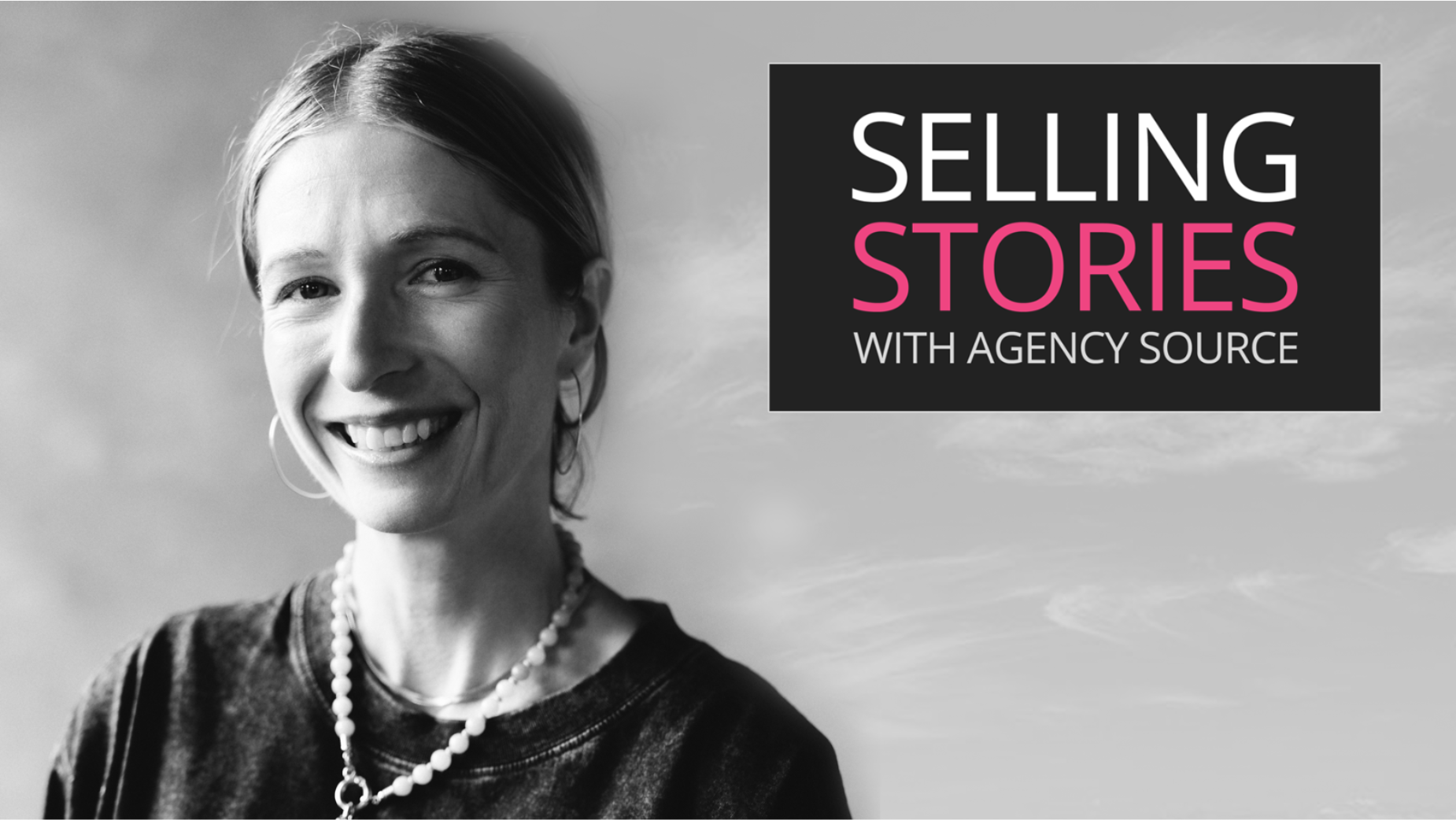
This Selling Stories conversation features Taylor Fisher, executive producer at Caravan, discussing the evolving relationship between production companies, agencies, and brands. Drawing on experience across both agency and production sides, Taylor shares a perspective on working across disciplines and navigating increasingly direct relationships with brands.
The conversation explores the shift toward more project-based work, the growth of in-house teams, and how production partners are adapting to changing workflows and expectations. It also looks at how approaches differ when working with agencies versus brand clients, and what that means for communication, collaboration, and long-term relationship building.
At its core, the discussion highlights the importance of adaptability, clear communication, and maintaining strong relationships across an increasingly fluid production landscape.
For more information, visit Agency Source.
Skylar Davis> Taylor – In your experience how has the process of building relationships with new production clients changed in the last five years or so… and what are the techniques you employ to start that process?
Taylor Fisher> This industry is one of my special interests – I live and breathe production and have done so for the majority of my life, so I can really get into my production-nerd persona.
For Caravan, the data we’re seeing is really validating the idea that the creative economy pre-covid, and through covid, seemed to reward specialisation. You were maybe a comedy shop or an auto shop, and you targeted specific pipelines pretty intentionally. Coming out of covid, it almost seems like all of us did too good a job of weathering that crisis. I’ve seen it at brands and at agencies, so it’s no surprise it’s also trickling into the production space.
This generalist mentality is more and more being asked of partners, and we’re really having to stretch our capabilities. In 2023, as the partners at Caravan and I started looking at the economic data, it became pretty clear we needed to be intentional about finding work across a much wider swath of the industry. We were no longer just planting our flag in the rep space or just targeting brands – it had to be a combination of every possible permutation for us as a boutique.
Ross MacRae> That’s really interesting. You said post-covid survival came from being more generalist because you had to be – that’s a great point.
Taylor Fisher> Yeah. I think all of us responded pretty well to that crisis overall. We pivoted back home quickly, maintained our workloads, and showed that we could hold more. The industry called our bluff that we could sustain that. We’re trying to rise to the occasion as much as possible.
But beyond just having a presence across more corners of the industry, we’ve also had to be really intentional that our efforts in each space are supporting our efforts in the others. For example, volume walls are really trending in the traditional commercial space, and there are skill sets that flow out of that specialty with a lot of relevance for the brand space. So as often as possible, I’m targeting traditional commercial opportunities coming through my representation and using those to better equip us to respond to the needs we’re seeing on the brand side. It’s a very holistic strategy at Caravan.
Skylar Davis> You’ve worked both agency-side and production company-side – how has that experience shaped the way you build relationships with brands today, given that more and more Agency AND Production people are moving ‘brand-side’?
Taylor Fisher> I try to hide my age, but I think I’m about to show my cards here. My personal experience is that the permeability between the layers of the industry is tidal or cyclical at best. It seems to be a migration that we see pretty predictably every seven to ten years – from agencies to brands, but eventually they make their way back over to agencies and the cycle continues. That’s at least what I’ve seen over my 25-ish years in the industry.
Ultimately, I made the choice to jump from the agency space back to the production company space because I wanted to operate with more empathy. Caravan has made a lot of space for that, and Agency Source has really supported those efforts as well.
What that looks like in practice is we invest really heavily in onboarding and understanding our clients. I want to know what a win looks like for them, who the stakeholders are that are influencing decisions, what getting their buy-in looks like, and how we can support that. It requires a lot of research on our part – and the first stop for me is Agency Source to better understand how their organization is set up, who the key players are, and who I may need to activate to ensure a project is successful.
Ross MacRae> How much time do you spend on that discovery phase – in terms of hours or weeks – where you’re looking at the company structure, job titles, who to approach?
Taylor Fisher> It does vary a little, particularly on the agency side through more traditional pipelines. For direct-to-brand, our consideration cycle typically lasts between 12 to 18 months. The partners and I identify an ideal client profile that makes sense for us and our skill set at that given moment, then I’ll launch into a research phase and try to make contact and build understanding from there. All in, that typically lasts between a year and a year and a half – it’s a significant investment.
Ross Macrae> Is that from drawing up the list in month one, to making first outreach at 18 months? Or does outreach happen earlier in the process?
Taylor Fisher> The outreach typically lands between the three-to-six-month mark, and then it continues from there.
Ross Macrae> So you make outreach while you’re still gathering information. That makes total sense – that’s exactly the way to do it.
Taylor Fisher> It definitely front-loads our investment, and that might not make sense for every organisation. But for us, it’s allowed us to ensure the client walks away with a project that’s successful for them – or ensure it as best we can – and it’s a piece of work we’re proud to present. We’ve seen a pretty significant increase in profit margins around that work because we were able to bring that insight into the bidding process.
Ross Macrae> Brilliant. And how different would you say that is from how an agency would approach it?
Taylor Fisher> I don’t think it’s dissimilar. It’s sort of like the physics rule that energy is neither created nor destroyed – I don’t think these capabilities or client needs are going away; they’re just landing in different hands than they did previously. We’re just inheriting more of that work.
Ross Macrae> That’s really interesting, because that’s been the story of the industry over the last 20 years or more. Desktop publishing, the Mac revolution, jobs that were outsourced came in-house. Then the dot-com bubble, then the internet changed everything, and then covid was the next big milestone.
Skylar Davis> Having sat on both sides, do you feel like you’re able to ‘speak both languages’ when working with brand teams, especially those who have come from agency or production backgrounds?
Taylor Fisher> I personally have benefited from looking at the landscape through a wider lens. I’m not only having to speak brand, agency, and production languages — I’m having to be mindful of economics, what’s happening in the political sphere, what’s happening globally, and bring those insights to inform my bids and my relationships.
A great example: January 2025 was on track to be the best sales month in Caravan’s history, and almost all of those sales were in the traditional commercial automotive market. When tariffs landed and uncertainty was introduced into that economic landscape, we had clients who had just signed contracts who needed to walk those agreements back, or we’d had verbal awards that changed overnight. The partners and I really had to evaluate how to win the war versus just win the battle relationally. It became very clear we needed to be mindful of economics, politics, and the geopolitical landscape.
Ross Macrae> That ties in exactly with our experience in February, March, and April last year. The green lights weren’t going on. And we just began to recover from that when the next geopolitical decision put us all back where we were. The first thing to go is always marketing and advertising budget.
Taylor Fisher> Absolutely. And this might not be the most intuitive connection back to Agency Source, but at Caravan we were previously doing research around our ideal client profiles every three to five years. After January 2025, we decided we needed to be re-calibrating those profiles quarterly. That allowed us to bring in all of those economic factors – and Agency Source let me do better and more effective research into disruptor agencies popping up or alternative options we might not have been targeting previously.
Ross Macrae> That is a big jump, from every five years to four times a year.
And there were a lot of companies fragmenting – large agencies downsizing, new pop-ups emerging, traditional agencies going out of business. We saw the average tenure at an agency reduce significantly over the last five years. The one constant in this industry is change.
Taylor Fisher> It’s not that we start from scratch every quarter – we just don’t take things for granted.
Skylar Davis> Caravan gets a significant portion of its work from brands directly – roughly how much of your work comes from direct brand relationships today?
Taylor Fisher> Knowing this question was coming, I checked our books this morning. As of this morning – and two larger projects greenlit on the brand side last night – 80% of our books are direct-to-brand.
Ross Macrae> Really? You said 50% when we last spoke.
Taylor Fisher> I know. Those were large jobs, so they swung the pendulum pretty quickly. I’m not at all worried about that being published. I still value my reps and they still bring me really good business. And often that allows me to pressure-test and optimise skills that I think will bring a lot of value on the brand side – things the brand side may not even know to ask for. But it’s a data point I thought would be really insightful.
Ross Macrae> That’s really significant – and it refers back to that original point about having worked on both sides and speaking two languages. I can see why reps wouldn’t love that number, though.
Skylar Davis> What are the biggest differences when working with a direct brand client versus an agency partner?
Taylor Fisher> I have to acknowledge that two decades of my life were spent on the agency side, so I have a deep reverence and affection for those skill sets and the value they bring. Two things can be true simultaneously – there’s probably room for improvement in the agency model, but there’s also a lot of value in those specialties. When done well, client service, strategy, and project management are really invaluable.
As I said earlier, those needs don’t go away when we’re talking to brands – but who owns the responsibility certainly shifts. That’s something we have to be really vigilant about as we price things and put guardrails in place to manage and steward those relationships.
I normally start with Agency Source to visualise how their organisation is structured and identify the various stakeholders. I use it to help identify internal allies beyond just my initial point of contact – other people who may be able to support and evangelise the work we’re doing together.
We feel like the shift to brand work has also really forced us to be the best communicators we’ve ever been. Our communication is intuitive and comprehensive, because even though a lot of folks came from the agency world into the brand space, they may have expectations for services that were being paid for on the agency side that we’re not necessarily equipped to bring to the discussion. Flushing out any misalignment early is really important to us.
Ross Macrae> So that’s from people who are used to certain services at an agency and don’t realise those won’t be included in the production budget.
Taylor Fisher> Exactly. Project management in particular has been a sticking point, especially when working with global or very large enterprise partners. The investments they’re making in the content space are going to be touched by multiple centres within the organisation, each with different specs, aspect ratios, translation needs – and it’s really easy for those details to slip through the cracks. Even though it’s not our fault, it is our responsibility. We have to be hyper-vigilant.
Ross Macrae> That connects to an earlier article we did with Reuben at Caffeine, where he talked about how technology has allowed clients to expect more content from the same shoot for the same budget – different aspect ratios, different platforms, out-of-home, behind-the-scenes. The technology enabled it, but the creative aspect wasn’t always factored in.
Taylor Fisher> Absolutely. There’s a lot of invisible effort and labour that goes into supporting an integrated campaign successfully. And as technology increases, it’s really easy to lose our connective tissue as an organisation, and also easy to lose sight of our critical thinking skills. We just have to be hypervigilant about speaking the unspoken and making sure we’re aligned on all those little details.
Skylar Davis> We’ve seen the number of direct brand contacts on the Agency Source platform grow significantly in recent years – how useful has Agency Source been for you in building those relationships or reaching the right people?
Taylor Fisher> Priceless, instrumental, a necessity, a must-have…. I really don’t think we would have had the success we’ve had over the last very uncertain five years without access to a tool like Agency Source.
In the same way I used to call out production-nerd details when watching films, I’ve recently been feeling that way about the social space. The partners at Caravan and I – if we see products we believe in, we’ll target those organisations as potential clients. I wouldn’t be able to do that research without Agency Source. Eighty times out of 100, you have contact info for those brands, even if they’re start-ups. And even if you don’t have contact for the exact individual I want to target, you can still give me insight into their email format. It’s a great springboard.
Agency Source cracks open the door – Even in new situations, like a start up with only one or two entries, it still gives me a point of entry, which I don’t take for granted. It makes my job significantly easier.
Ross Macrae> It’s almost the case that every company has its own individual job title for the role you want to reach. You have to do the legwork – go to LinkedIn, look at the history, and work out who the right person is.
Taylor Fisher> Exactly. Even if the listed contact is a COO and that’s not who I want to start with, I can still go to their profile, learn more about the organisation, and find the other people associated with it. It’s just an incredible springboard.
Ross Macrae> Would you target more junior people, middle management, or the C-suite?
Taylor Fisher> I’ve had the most effective groundswell by targeting the middle tier. It was actually a practice I started when relying more heavily on traditional representation – while my reps were targeting EPs and producers, I would try to grease the rails by building reputation and affinity among creatives. So if my representation went to plant a seed, at least it was landing on fertile soil.
Ross Macrae> So – creative directors, art directors. Yeah, exactly. They’re the ones who go and say, “We want to do this using this company.”
Taylor Fisher> Most effective cheerleaders.
Ross Macrae> HA! – That’s going in as a quote.
Skylar Davis> Looking ahead, do you see this shift toward direct-to-brand relationships continuing to grow, and what advice would you give to production companies trying to build those connections?
Taylor Fisher> I touched on this earlier – my view is that this feels pretty tidal or cyclical in nature, and I stand by that. But I’d add to it: a lot of this really boils down to semantics. Whether these people are housed on the agency side or the brand side, they’re still the same people, still trying to achieve the same objectives. The skill set we’ve built over our careers doesn’t go away – it’s just being targeted at a different corner of the industry.
That said, one thing that does feel like a genuine nuance – this is the first time in my career that I’ve seen a lot of our reps actively trying to move into the brand space. That validates that this might be a more significant migration than we’ve seen previously.
In terms of advice – there’s an episode of The Office where Timothy Olyphant is a guest star playing a sales rep for a competitor. The team tries to figure out how he’s so successful, so they plant a hidden camera in one of his sales sessions. They witness that his technique is to have the client sell to him. He starts the conversation by saying, “I’m not trying to sign a contract today – I’m trying to see if this would be a good fit.” And candidly, that is a tactic we’ve really brought into our work.
It’s the difference between a shotgun approach and a very targeted one. We do our homework. We’re intentional about understanding what kinds of clients are successful for us and targeting those people deliberately. We have to be self-aware and honest about our strengths, commit to exploiting them through those relationships, and be willing to let other opportunities slide by. And it’s forced us to be incredibly clear about our boundaries and assumptions – and to make space for our clients to reciprocate.
Just be really intentional about where you plant your seeds, and water what you hope will grow.
Ross Macrae> I love that – ‘We’re not here to sign a contract today.’ That’s essentially what we always say: we never talk about ourselves; we always talk about the prospective client. That’s great advice for any company in any industry.
Taylor Fisher> Thank you, Ross.
For more information, visit Agency Source.